
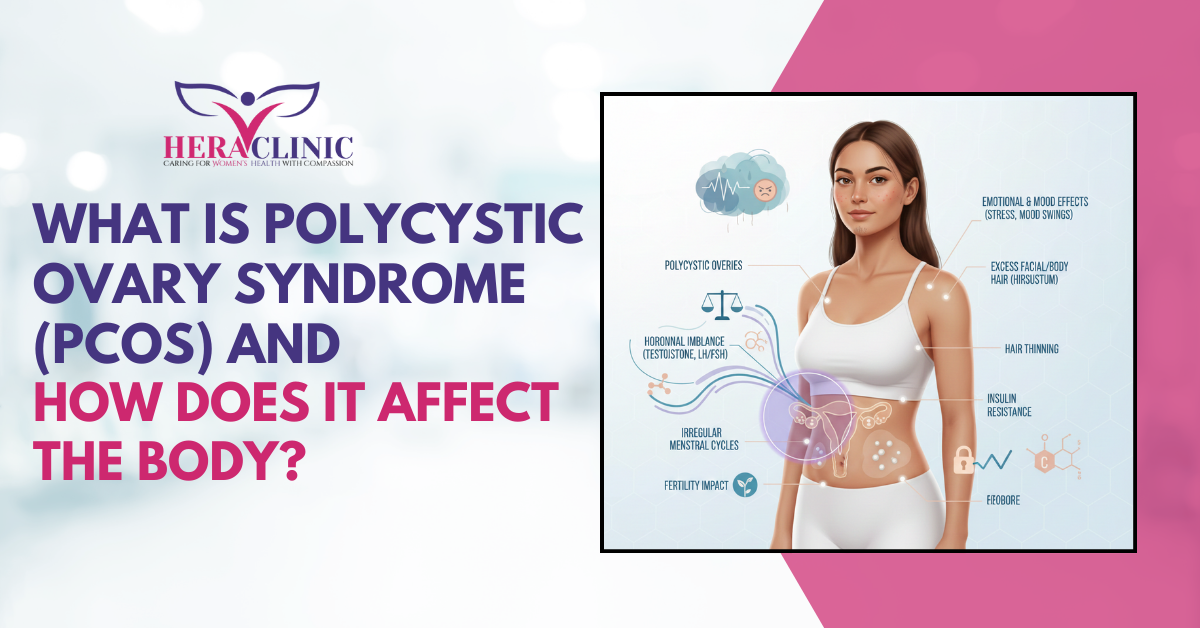
What Is Polycystic Ovary Syndrome (PCOS) and How Does It Affect the Body?
Polycystic Ovary Syndrome (PCOS) is one of the most common yet misunderstood hormonal conditions affecting women today. It doesn’t appear suddenly, and it doesn’t affect just one part of the body. PCOS works quietly, influencing hormones, metabolism, menstrual health, skin, emotional well-being, and fertility over time.
Many women live with symptoms for years of irregular periods, stubborn weight gain, acne that won’t clear, or difficulty getting pregnant without realizing that all these concerns are connected. PCOS is not “just hormones.” It is your body signaling that something deeper needs balance, care, and understanding.
At Hera Clinic, PCOS care focuses on understanding the whole woman, not just lab reports or symptoms.
What Is Polycystic Ovary Syndrome (PCOS)?
Polycystic Ovary Syndrome, commonly known as PCOS, is a hormonal disorder that affects women of reproductive age. It occurs when the ovaries produce higher-than-normal levels of male hormones (androgens), leading to hormonal imbalance and irregular ovulation.
Despite the name, PCOS doesn’t always mean cysts are present. Instead, it reflects a disruption in how the ovaries, hormones, and metabolism work together. This imbalance can impact menstrual cycles, fertility, weight, skin, and long-term health if left unmanaged.
PCOS vs PCOD
PCOS is often confused with PCOD (Polycystic Ovarian Disease). While related, PCOS is considered more complex and systemic, involving hormonal and metabolic changes that affect the entire body, not just the ovaries.
How Common Is PCOS?
PCOS is one of the most common hormonal disorders affecting women globally. Its prevalence has increased due to modern lifestyle factors such as sedentary habits, irregular eating patterns, chronic stress, and sleep disturbances.
Many women remain undiagnosed because:
- Symptoms develop slowly
- Menstrual irregularities are normalized
- Weight gain is blamed on lifestyle alone
- Skin issues are treated separately
Early diagnosis can significantly reduce the risk of long-term complications and improve quality of life.
How PCOS Affects the Body
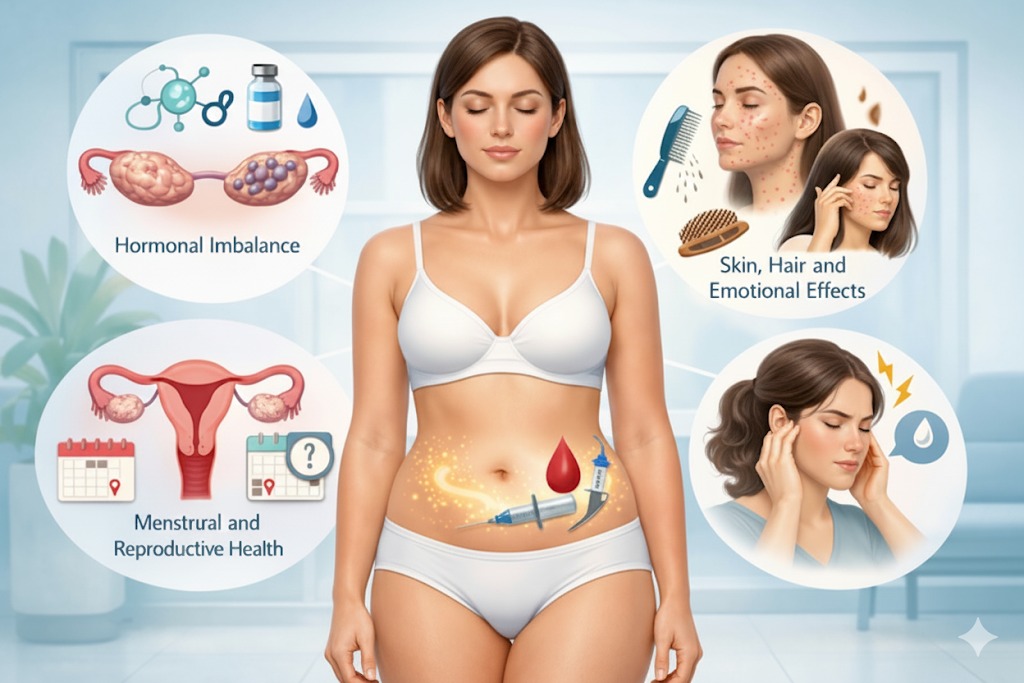
PCOS impacts multiple systems simultaneously, which is why symptoms may appear unrelated at first.
Hormonal Imbalance
The hormonal imbalance seen in PCOS disrupts ovulation and menstrual regularity. Elevated androgen levels can also affect skin, hair, and emotional well-being.
Menstrual and Reproductive Health
Women with PCOS may experience:
- Irregular, infrequent, or absent periods
- Unpredictable ovulation
- Difficulty conceiving without support
PCOS-related infertility is often treatable, especially when addressed early.
Metabolic Health and Insulin Resistance
Insulin resistance is a central feature of PCOS. When the body does not respond properly to insulin, blood sugar levels rise, triggering further hormonal imbalance. This can lead to:
- Weight gain, particularly around the abdomen
- Difficulty losing weight despite effort
- Increased risk of type 2 diabetes
- Low energy levels and cravings
Skin, Hair, and Emotional Impact
PCOS can affect self-image and confidence due to:
- Acne that persists beyond teenage years
- Excess facial or body hair
- Hair thinning or scalp hair loss
Emotionally, hormonal fluctuations may contribute to anxiety, mood changes, and feelings of frustration or isolation. Addressing emotional health is an essential part of PCOS care.
Common Signs and Symptoms of PCOS
PCOS symptoms vary widely but may include:
- Irregular or missed menstrual cycles
- Sudden or gradual weight gain
- Difficulty losing weight
- Acne, pigmentation, or oily skin
- Excess facial or body hair
- Hair thinning or hair fall
- Fertility challenges
- Fatigue, anxiety, or mood swings
Experiencing multiple symptoms together often indicates an underlying hormonal imbalance that should be evaluated.
What Causes PCOS?
PCOS develops due to a combination of interconnected factors rather than a single cause:
- Hormonal imbalance affecting ovulation
- Insulin resistance worsening androgen production
- Genetic tendency, as PCOS often runs in families
- Lifestyle influences such as diet, stress, inactivity, and sleep disruption
Understanding these contributing factors allows treatment to be more precise and effective.
Why Choose Our PCOS Care Services?
PCOS requires understanding, patience, and a personalized approach. Our care philosophy emphasizes:
- Individualized treatment planning
- Holistic focus on hormonal and metabolic health
- Clear communication and patient education
- Support through every stage of life
Under the guidance of Dr. Sairandhri Kate-Shinde care is focused on empowering women to understand their bodies and take control of their health.
Take Control of Your PCOS Journey
PCOS does not define you. With the right diagnosis, medical care, and lifestyle guidance, it can be managed effectively.
If you are looking for experienced PCOS treatment doctors in PCMC, Hera Clinic offers compassionate, comprehensive care focused on your long-term health and well-being.
Book a consultation today and take control of your PCOS journey with confidence.