
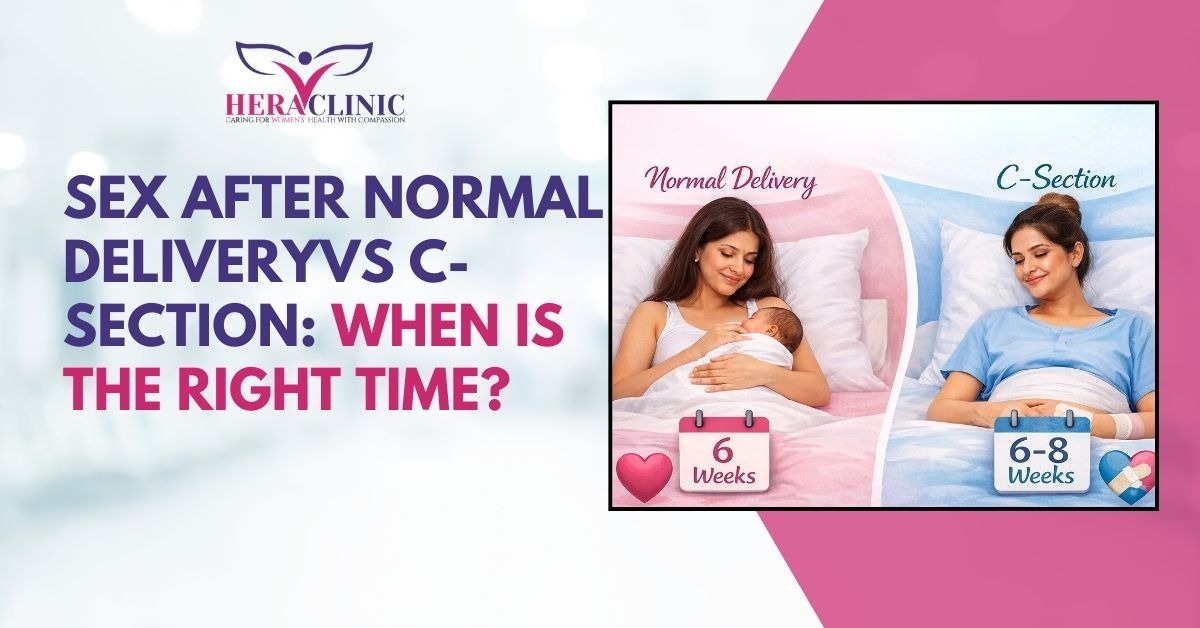
Sex After Normal Delivery vs C-Section: When Is The Right Time?
Welcoming a new baby into your life is one of the most joyful experiences, but it's also a time of major physical, emotional, and hormonal changes. Amid all the excitement and challenges of parenthood, many new mothers wonder: "When is it safe to resume sexual activity after childbirth?" This is a natural and important question because postpartum intimacy is closely tied to both physical recovery and emotional well-being.
Whether you had a vaginal delivery or a C-section, your body needs time to heal, and understanding the differences in recovery timelines is crucial. At Hera Clinic, under the care of Dr. Sairandhri Kate-Shinde, we provide personalized guidance to help new mothers navigate this sensitive phase safely and confidently.
Understanding Postpartum Recovery
Physical Recovery After Vaginal Delivery
After a vaginal delivery, your body undergoes several changes that need time and care to recover. Common physical changes include:
- Vaginal tears or episiotomies: Small stitches may take a few weeks to heal fully.
- Swelling and soreness: Tissue around the vaginal area can remain tender for some time.
- Pelvic floor weakness: The muscles supporting your bladder, uterus, and bowels are often stretched, which may affect comfort during sexual activity.
Many women also experience vaginal dryness due to hormonal shifts, especially if they are breastfeeding. This can make sexual activity uncomfortable, but using a gentle, water-based lubricant can help.
Key tips for vaginal recovery:
- Allow at least 6 weeks for your body to heal before attempting sexual activity.
- Listening to your body — discomfort or pain is a sign to wait longer.
- Focus on non-sexual intimacy initially — cuddling, massages, and gentle touch can strengthen your emotional connection without stress.
Physical Recovery After C-Section
C-sections are major abdominal surgeries, so the recovery process is generally longer and requires more caution. Key points to consider:
- Incision healing: The abdominal incision can be tender, and scar tissue may cause discomfort.
- Restricted mobility: Activities like lifting, bending, or even rolling over in bed can be uncomfortable in the early weeks.
- Pain and swelling: These can persist for several weeks and may affect your comfort during sexual activity.
Tips for resuming sex after a C-section:
- Avoid positions that put pressure on your incision. Side-lying or woman-on-top positions are often more comfortable.
- Gradually reintroduce intimacy, focusing first on emotional connection.
- Attend postpartum checkups at Hera Clinic, where Dr. Sairandhri Kate-Shinde can assess healing and provide personalized guidance.
Comparing the Timeline: Vaginal Delivery vs C-Section
Understanding the general timelines for sexual activity after childbirth can help you plan safely. While everybody is unique, here's a comparison:
| Type of Delivery | Typical Recovery Timeline | Things to Consider |
|---|---|---|
| Vaginal Delivery | ~6 weeks | Healing of tears or stitches, pelvic floor recovery, potential vaginal dryness |
| C-Section | 6–8 weeks | Incision healing, abdominal muscle recovery, scar tenderness |
Remember, these timelines are guidelines, not strict rules. Emotional readiness, comfort, and medical advice should always guide your decision.
Factors Affecting Postpartum Sexual Activity
1. Physical Factors
Physical discomfort is the most common reason women delay postpartum intimacy. Factors include:
- Vaginal dryness: Hormonal changes and breastfeeding can lower estrogen levels, causing dryness. Lubrication can help make intercourse more comfortable.
- Pain or discomfort: Tenderness, swelling, or stitches may cause pain if you resume sex too early.
- Healing tissues: Ensuring that your vaginal area or C-section incision has fully healed is essential to prevent complications like infection.
2. Emotional and Psychological Factors
Sex after childbirth isn't only physical — emotional readiness is equally important. Many new mothers experience:
- Fatigue: Newborn care is exhausting, and tiredness can reduce interest in sex.
- Body image concerns: Changes in weight, stretch marks, or surgical scars may affect confidence.
- Stress and anxiety: Adjusting to a newborn can make sexual intimacy feel overwhelming.
Talking openly with your partner about your feelings can rebuild intimacy and reduce stress. Emotional closeness often enhances physical intimacy, even before resuming sexual activity fully.
3. Medical Considerations
Consult your healthcare provider if you notice:
- Persistent pain or bleeding during or after sexual activity
- Unusual discharge or signs of infection
- Emotional or psychological issues affecting intimacy
Professional guidance ensures that postpartum mothers receive advice tailored to their specific recovery and health conditions, helping them resume sexual activity safely.
Tips for Safe and Comfortable Postpartum Sex
Resuming sexual activity after childbirth doesn't need to be stressful. Here are practical tips:
- Take it slow: Begin with non-sexual intimacy like holding hands, cuddling, or massages.
- Experiment with positions: Certain positions, like side-lying or woman-on-top, minimize discomfort and pressure on healing areas.
- Use lubrication: Water-based lubricants can help combat vaginal dryness caused by hormonal changes or breastfeeding.
- Strengthen pelvic floor muscles: Kegel exercises can improve blood flow, strengthen muscles, and enhance comfort during intercourse.
- Communicate with your partner: Share your feelings, concerns, and comfort levels openly. Patience and understanding from both sides improve the experience.
Remember, emotional readiness is just as important as physical healing. Taking time to rebuild intimacy gradually ensures a positive and enjoyable experience for both partners.
Addressing Common Concerns
Q: How soon can I have sex after a C-section incision has healed?
A: Typically 6–8 weeks, but always consult your doctor, as healing rates vary.
Q: What happens if you have sex too soon after childbirth?
A: Resuming sex too early may cause pain, infection, or delayed healing. Listening to your body is essential.
Q: Does the type of delivery affect postpartum sex life?
A: Yes. Vaginal deliveries and C-sections involve different healing processes, and each may affect sexual comfort differently.
Q: How does breastfeeding affect sexual activity postpartum?
A: Breastfeeding alters hormone levels, which may reduce libido and cause vaginal dryness. Using lubrication, maintaining open communication, and gradually resuming intimacy helps overcome these challenges.
When to Seek Medical Advice
Consult a healthcare provider if you experience:
- Pain during or after sexual activity
- Persistent bleeding or unusual discharge
- Signs of infection near a C-section incision or vaginal area
- Emotional distress affecting intimacy
Seeking timely medical advice ensures safe healing and prevents complications. Consulting Dr. Sairandhri Kate-Shinde can help you receive personalized guidance on recovery timelines and practical strategies for resuming sexual activity comfortably and safely.
Conclusion
Resuming sexual activity after childbirth is about listening to your body, healing at your own pace, and maintaining open communication with your partner. Most women can safely resume sex around 6 weeks after vaginal delivery and 6–8 weeks after a C-section, but every recovery is unique.
Focusing on both physical and emotional health ensures a safe, comfortable, and enjoyable return to intimacy. With professional support and proper medical guidance, new parents can navigate this sensitive phase with confidence and strengthen their bond after childbirth.
Ready to schedule your postpartum consultation? Contact Hera Clinic today for personalized care and expert guidance.