
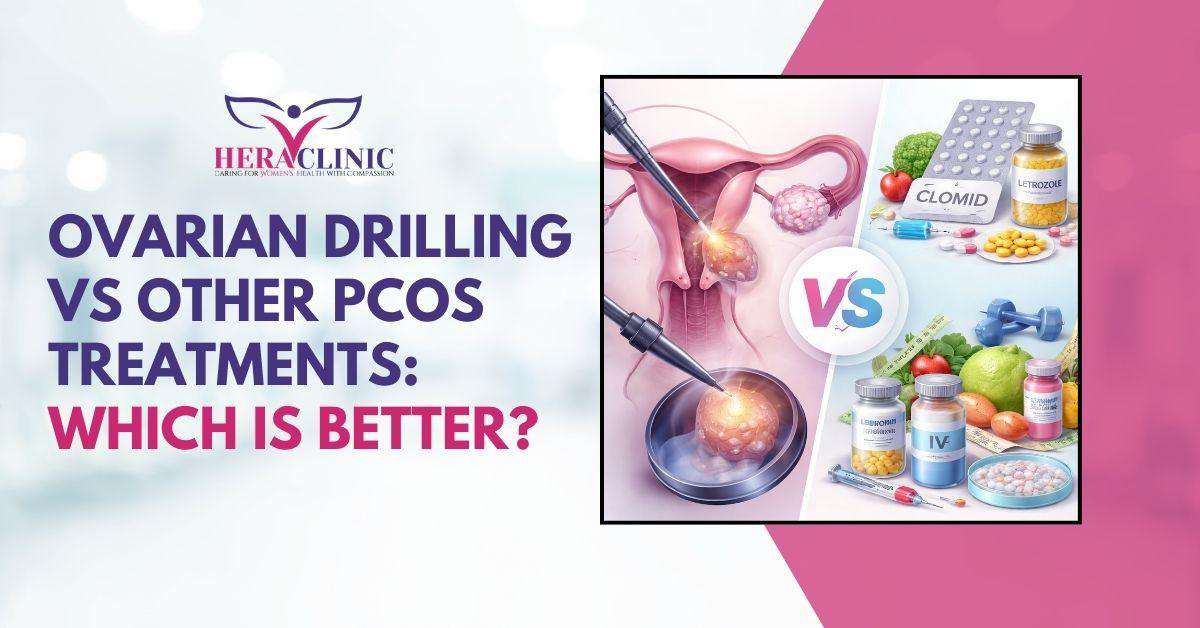
Ovarian Drilling vs Other PCOS Treatments: Which Is Better?
Polycystic Ovary Syndrome (PCOS) is one of the most common hormonal conditions affecting women of reproductive age. Many women with PCOS experience irregular periods, hormonal imbalance, and difficulty conceiving. When ovulation does not occur regularly, getting pregnant naturally can become challenging.
Fortunately, modern medicine offers several PCOS treatment options that can help regulate ovulation and improve fertility. These treatments range from lifestyle changes and medications to more advanced procedures such as ovarian drilling surgery or assisted reproductive technologies like IVF.
If you’ve been researching fertility treatments, you may have come across ovarian drilling for PCOS. But how does it compare to other treatments such as medications or IVF? And more importantly, which option is better for improving fertility?
In this guide, we’ll explore how ovarian drilling works, its benefits and risks, and how it compares with other common PCOS treatments so you can better understand your options.
Understanding PCOS and Its Impact on Fertility
What Is PCOS?
PCOS is a hormonal disorder that affects how the ovaries function. Women with PCOS often produce higher levels of androgens (male hormones), which can interfere with the development and release of eggs from the ovaries.
As a result, ovulation may occur irregularly or not at all. This is one of the primary reasons why PCOS can lead to infertility.
Common Symptoms of PCOS
While symptoms can vary from person to person, common signs include:
- Irregular or missed menstrual periods
- Excess facial or body hair
- Acne or oily skin
- Weight gain or difficulty losing weight
- Thinning hair on the scalp
- Multiple small cysts on the ovaries
Not every woman with PCOS will experience all of these symptoms, but hormonal imbalance is a key feature of the condition.
Why PCOS Causes Infertility
For pregnancy to occur naturally, the ovary must release a mature egg during ovulation. In PCOS, hormonal imbalance disrupts this process.
Key factors include:
- Increased androgen levels
- Insulin resistance
- Irregular follicle development
These factors prevent the ovaries from releasing eggs regularly, making conception difficult without treatment.
What Is Ovarian Drilling for PCOS?
Ovarian drilling is a minimally invasive surgical procedure used to treat infertility in women with PCOS who do not respond to medication.
The procedure is performed using laparoscopy, a technique that involves small incisions and a camera inserted into the abdomen.
How the Procedure Works
During laparoscopic ovarian drilling:
- A surgeon inserts a small camera through a tiny incision near the navel.
- Specialized surgical instruments are used to create small holes in the ovarian surface.
- These holes are made using heat or laser energy.
The goal of the procedure is to reduce androgen-producing tissue in the ovaries.
How It Helps Restore Ovulation
By lowering androgen levels, ovarian drilling can help restore hormonal balance. As hormone levels normalize, the ovaries may begin releasing eggs regularly again.
For many women, this means ovulation may occur naturally without the need for ongoing fertility medications. Fertility specialists at clinics such as Hera Clinic often evaluate patients carefully to determine whether ovarian drilling could be an effective option after medication treatments have been unsuccessful.
When Is Ovarian Drilling Recommended?
Ovarian drilling is typically not the first treatment option for PCOS. Doctors usually recommend lifestyle changes and medications before considering surgery.
However, ovarian drilling may be recommended in certain situations, such as:
- Women with clomiphene-resistant PCOS
- Patients who do not ovulate with fertility medications
- Women who want to avoid repeated medication cycles
- Cases where hormone levels remain significantly elevated
A fertility specialist will usually recommend ovarian drilling only after other treatment options have not produced results. If you are experiencing persistent fertility challenges related to PCOS, consulting the best PCOS treatment doctor in Punawale can help determine the most appropriate treatment plan based on your individual condition.
Benefits of Ovarian Drilling
One of the main reasons ovarian drilling is considered for PCOS treatment is its potential to improve ovulation without long-term medication.
Some of the key benefits include:
Restores Natural Ovulation
Many women begin ovulating naturally after the procedure, improving the chances of pregnancy.
Reduces Androgen Levels
The procedure reduces hormone-producing tissue, which may lower androgen levels.
Minimally Invasive Procedure
Since it is performed laparoscopically, ovarian drilling involves small incisions and relatively quick recovery.
Lower Risk of Multiple Pregnancy
Unlike fertility medications that stimulate multiple eggs, ovarian drilling usually results in the release of a single egg, reducing the risk of twins or triplets.
Risks and Possible Complications
While ovarian drilling is generally considered safe, like any surgical procedure, it carries some risks.
Potential complications include:
- Formation of pelvic adhesions (scar tissue)
- Infection or bleeding
- Damage to ovarian tissue if excessive drilling occurs
- Anesthesia-related risks
Another important consideration is that ovarian drilling may not work for every patient. Success often depends on factors such as age, weight, and hormone levels.
Other Common PCOS Treatment Options
Before considering surgery, most doctors recommend trying other treatment approaches for PCOS.
Lifestyle and Weight Management
Lifestyle changes are often the first step in managing PCOS.
Even modest weight loss can help regulate hormone levels and improve ovulation. Common recommendations include:
- Balanced diet rich in whole foods
- Regular physical activity
- Managing insulin resistance
For some women, lifestyle improvements alone may restore ovulation.
Medications for PCOS
Ovulation-inducing medications are commonly used to treat PCOS-related infertility.
Two of the most frequently prescribed medications include:
- Clomiphene (Clomid) – stimulates ovulation by encouraging the ovaries to release eggs.
- Letrozole – often considered the first-line medication for ovulation induction in PCOS.
Doctors may also prescribe Metformin to improve insulin sensitivity and help regulate hormones.
Hormonal Treatments
Hormonal contraceptives may be recommended for women who are not trying to conceive but want to manage PCOS symptoms.
These medications can help:
- Regulate menstrual cycles
- Reduce acne
- Lower androgen levels
Assisted Reproductive Techniques
For women who do not respond to medications or surgery, assisted reproductive technologies such as in vitro fertilization (IVF) may be recommended.
IVF involves fertilizing eggs outside the body and transferring embryos into the uterus.
Ovarian Drilling vs Medications (Clomid and Letrozole)
One of the most common comparisons in PCOS treatment is ovarian drilling vs medication.
Effectiveness
Medications like Letrozole and Clomid are usually the first treatment for inducing ovulation. Many women respond well to these drugs.
However, some women do not ovulate despite medication. In these cases, ovarian drilling may help stimulate ovulation.
Cost Comparison
Medication treatments are usually less expensive initially.
However, if multiple cycles of medication are required, the cost may increase over time.
Ovarian drilling involves a surgical procedure, which may have higher upfront costs.
Side Effects
Fertility medications may cause side effects such as:
- Mood swings
- Hot flashes
- Ovarian hyperstimulation
Surgery carries different risks, such as infection or adhesion formation.
Best Candidates
Medication is typically recommended first.
Ovarian drilling may be suitable for women who do not respond to ovulation-inducing drugs.
Ovarian Drilling vs IVF
Another important comparison is ovarian drilling vs IVF.
Success Rates
IVF often offers higher pregnancy rates because fertilization occurs in a controlled laboratory environment.
Ovarian drilling relies on the body’s natural ovulation process.
Cost Differences
IVF is usually significantly more expensive than ovarian drilling.
Many couples choose ovarian drilling as an intermediate step before considering IVF. Fertility centers such as Hera Clinic often evaluate factors like age, hormone levels, and previous treatments before recommending whether ovarian drilling or IVF would be the more suitable option.
Treatment Duration
IVF involves multiple steps including hormone injections, egg retrieval, and embryo transfer.
Ovarian drilling is a one-time surgical procedure that may allow natural conception afterward.
When IVF Is Recommended
IVF may be preferred in situations such as:
- Severe infertility
- Blocked fallopian tubes
- Male factor infertility
- Failed previous treatments
Success Rate of Ovarian Drilling
The success rate of ovarian drilling varies depending on individual health factors.
Research suggests that:
- Many women resume ovulation within a few months after surgery.
- Pregnancy rates can range from 40% to 60% in suitable candidates.
Factors that influence success include:
- Age
- Body weight
- Severity of PCOS
- Duration of infertility
A fertility specialist can help determine whether ovarian drilling is likely to be effective in your situation.
Recovery After Ovarian Drilling
One advantage of laparoscopic ovarian drilling is the relatively short recovery period.
Procedure Duration
Ovarian drilling is usually performed as a laparoscopic surgery and typically takes around 30 to 60 minutes to complete. Since it is a minimally invasive procedure, it involves small incisions in the abdomen, allowing doctors to perform the treatment with precision while minimizing trauma to surrounding tissues.
Recovery Time
Most women recover relatively quickly after ovarian drilling. Patients are usually discharged on the same day or within 24 hours. Mild discomfort, fatigue, or abdominal soreness may occur for a few days, but most individuals can return to normal daily activities within about 3 to 5 days.
Return of Ovulation
Ovulation may resume within 4 to 6 weeks after the procedure as hormone levels begin to stabilize. In many cases, women start experiencing more regular menstrual cycles following surgery, which can improve the chances of natural conception during the months after treatment.
Who Is the Best Candidate for Ovarian Drilling?
Not every woman with PCOS needs ovarian drilling.
The procedure is usually recommended for women who:
- Have PCOS-related infertility
- Do not respond to ovulation medications
- Have elevated androgen levels
- Prefer an alternative to repeated medication cycles
A detailed evaluation by a fertility specialist is necessary to determine if this treatment is appropriate.
How to Choose the Right PCOS Treatment
Choosing the right treatment for PCOS depends on several factors.
These include:
- Age and reproductive goals
- Severity of symptoms
- Response to previous treatments
- Hormone levels
- Overall health
Since PCOS affects each woman differently, treatment plans are usually personalized.
Consulting a fertility specialist can help determine which approach offers the best chance of success.
When to See a Fertility Specialist
If you have PCOS and are trying to conceive, you may benefit from professional guidance.
Consider seeing a specialist if:
- You have been trying to conceive for 12 months without success
- Your menstrual cycles are irregular
- You have symptoms of hormonal imbalance
- Previous treatments have not worked
Early evaluation can help identify the most effective treatment strategy.
FAQs About Ovarian Drilling and PCOS Treatments
1. Is ovarian drilling effective for PCOS infertility?
Yes, ovarian drilling can be effective for women with PCOS-related infertility who do not respond to ovulation-inducing medications. The procedure reduces androgen levels in the ovaries, which may help restore regular ovulation and increase the chances of natural pregnancy within several months after treatment.
2. What is the success rate of ovarian drilling?
The success rate of ovarian drilling varies depending on factors such as age, weight, and severity of PCOS. Studies suggest that many women resume ovulation after the procedure, and pregnancy rates may range between 40% to 60% in carefully selected patients.
3. Is ovarian drilling better than medication?
Ovarian drilling is usually not the first treatment option. Medications such as Clomid or Letrozole are typically recommended first because they are less invasive. However, ovarian drilling may be considered for women who do not respond to these medications.
4. How long does ovarian drilling surgery take?
Ovarian drilling is a minimally invasive laparoscopic procedure that usually takes around 30 to 60 minutes. The surgery involves small abdominal incisions where tiny holes are created in the ovaries. Most patients can go home the same day and recover within a few days.
5. Can ovarian drilling cure PCOS permanently?
Ovarian drilling does not permanently cure Polycystic Ovary Syndrome (PCOS) because the condition is linked to hormonal and metabolic factors. However, the procedure may improve ovulation and hormone balance for some time, increasing the chances of natural conception.
Conclusion
PCOS can make conception challenging, but several effective treatment options are available today. From lifestyle modifications and medications to advanced procedures like ovarian drilling and IVF, each treatment offers different benefits depending on the patient’s condition.
Ovarian drilling for PCOS may be a helpful option for women who do not respond to fertility medications. By restoring ovulation, it can improve the chances of natural pregnancy without the need for long-term drug therapy.
However, the most suitable treatment depends on individual factors such as age, hormone levels, and previous treatment response. Consulting a fertility specialist can help determine the best approach for achieving a healthy pregnancy. Learn more about PCOS fertility care by visiting our fertility treatment services.