
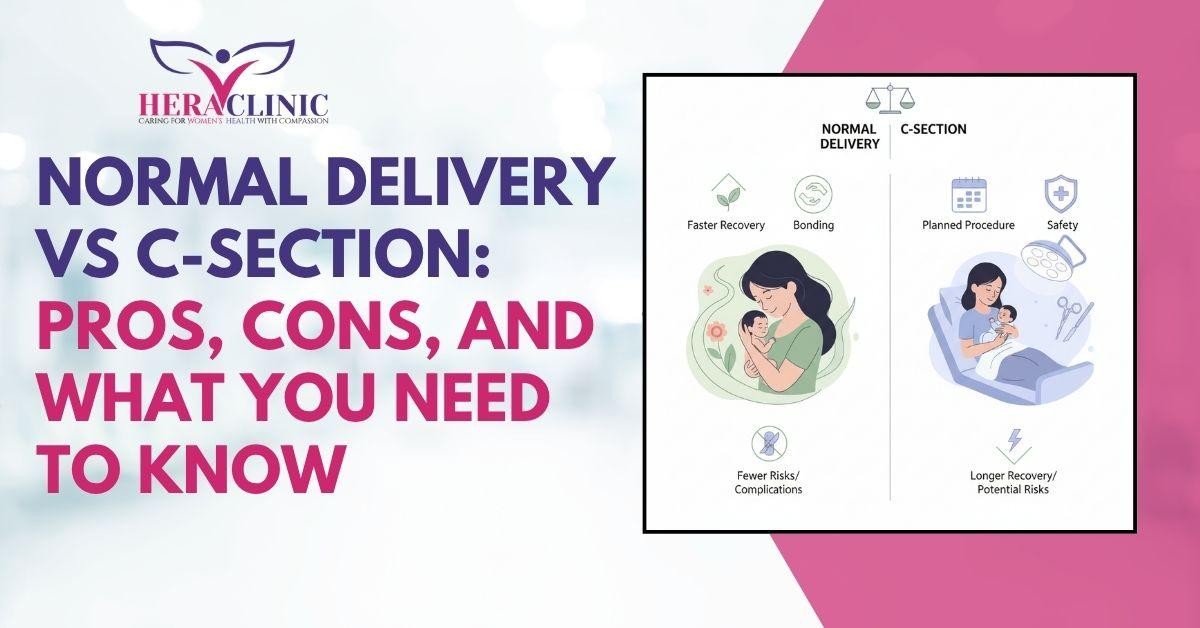
Normal Delivery vs C-Section: Pros, Cons, and What You Need to Know
Bringing a new life into the world is one of life’s most emotional and beautiful experiences. But one important question many expecting mothers face is — “Should I have a normal delivery or a C-section?”
Under the expert guidance of Dr. Sairandhri Kate, , expecting mothers can understand their options and make confident, well-informed decisions. Both childbirth methods can be safe when monitored by an experienced obstetrician — the key lies in knowing their pros, cons, and recovery process
This detailed guide explains everything you need to know about normal delivery vs C-section, backed by expert insights, medical facts, and real-world advice.
What Is a Normal Delivery (Vaginal Birth)?
A normal delivery, also called vaginal birth, is the natural way of giving birth where the baby is born through the birth canal without surgical assistance. Labor begins when the cervix dilates and contractions help move the baby out.
Key Highlights
- No major surgery involved
- Faster recovery and shorter hospital stay
- Natural hormone release promotes bonding and breastfeeding.
- Baby gains immunity from vaginal microbiota
While it’s the most natural form of childbirth, labor can be painful and sometimes requires an emergency C-section if complications arise.
What Is a C-Section (Cesarean Delivery)?
A C-section, or cesarean delivery, is a surgical method where the baby is delivered through incisions in the abdomen and uterus.
It may be:
- Planned (Elective): Scheduled in advance due to medical reasons or preference
- Emergency:Performed when unexpected complications occur during labor
Common Reasons for a C-Section
- Breech baby position
- Placenta previa (placenta covering the cervix)
- Fetal distress (abnormal heart rate)
- Multiple pregnancies
- Previous difficult delivery
Although C-sections are generally safe, they involve longer recovery and require careful postnatal care.
Pros and Cons of Normal Delivery (Vaginal Birth)
A normal delivery is the natural process of birthing through the birth canal without major surgical intervention. While it’s the most common and time-tested method, it comes with its own set of benefits and challenges.
Advantages of Normal Delivery:
- Faster recovery and a shorter hospital stay
- Lower Risk of Surgical Complications
- Better for the baby’s health./li>
Passing through the birth canal helps clear fluid from the baby’s lungs and strengthens breathing. The baby also gets beneficial bacteria that strengthen their immune system.
- Promotes Natural Hormone Release
- Future Pregnancies Are Easier
- Quicker Return to Normal Life
Mothers who deliver vaginally generally recover within a few days. Since no surgical incision is involved, mobility returns quickly, allowing new mothers to resume daily activities sooner.
Normal deliveries avoid risks associated with anesthesia, surgical bleeding, and infections—making it a safer choice for most healthy pregnancies.
Hormones like oxytocin and endorphins released during natural labor help reduce stress, strengthen emotional bonding, and promote milk production.
With no uterine scar, future births tend to be easier and carry lower risks compared to repeat C-sections.
Mothers can comfortably breastfeed, rest, and care for their newborns sooner—making the transition to motherhood smoother.
Disdvantages of Normal Delivery:
- Unpredictable Labor Pain
- Perineal Tears or Episiotomy
- Pelvic Floor Weakness
- Possible Emergency C-Section
- Emotional Fatigue
Labor can last several hours and cause intense pain. While pain relief (like an epidural) helps, the experience varies for every woman.
Vaginal stretching may lead to minor tearing that requires stitches. Proper care and rest promote quick healing.
The pelvic muscles stretch significantly, sometimes leading to temporary urinary leakage. Postpartum Kegel exercises can strengthen muscles again.
Some normal deliveries may need to be converted into emergency C-sections if complications arise.
Long labor hours can exhaust the body and mind. Support, breathing techniques, and a positive mindset make a big difference.
Pros and Cons of C-Section Delivery (Cesarean Birth)
A C-section is a surgical method to deliver the baby safely through an incision in the abdomen and uterus. It can be planned or performed in emergencies, depending on medical needs.
Advantages of C-Section Delivery:
- Planned and Predictable
- Reduced Labor Pain
- Safer for Complicated Pregnancies
- Lower Risk of Birth Canal Injuries
- Prevents Emergency Situations
With elective C-sections, delivery dates are scheduled in advance. This helps reduce anxiety and allows doctors to prepare adequately for complex pregnancies.
C-sections are done under anesthesia (spinal or epidural), so mothers feel no pain during the procedure. It’s a calm and controlled experience.
When the baby is breech, the placenta covers the cervix, or there’s fetal distress, a C-section prevents life-threatening risks for mother and baby.
Babies avoid vaginal pressure or trauma, reducing risks like shoulder dystocia or bruising.
For mothers with high-risk conditions, a planned C-section prevents the uncertainty of sudden labor complications.
Disadvantages of C-Section Delivery:
- Longer Recovery Period
- Post-Surgical Risks
- Newborn Breathing Issues
- Physical Limitations
- Future Pregnancy Complications
- Delayed Bonding and Breastfeeding
Since it’s a surgical procedure, recovery can take 4–6 weeks. Mothers may experience incision pain and limited mobility during healing.
There’s a slightly higher risk of infection, blood clots, or anesthesia reactions. Maintaining hygiene and following the doctor’s advice is crucial.
Babies born via C-section may initially experience mild breathing difficulties since they miss the natural compression during birth.
Lifting heavy objects or bending can be painful for weeks, making early childcare challenging.
Repeated C-sections can increase risks like placenta accreta or uterine rupture. Future pregnancies should be carefully monitored.
Recovery time may delay immediate skin-to-skin contact or breastfeeding, though most mothers catch up within a few hours post-delivery.
Recovery After Delivery: What to Expect
After Normal Delivery
- Rest well and walk lightly after 24 hours.
- Perineal stitches heal in 1–2 weeks.
- Eat fiber-rich foods to avoid constipation.
After C-Section
- Recovery takes about 4–6 weeks.
- Avoid lifting weights.
- Keep the incision clean and dry.
- Move gently to improve blood circulation
Effect on Baby: Health & Development
Normal Delivery Babies
- Better lung function and immunity
- Immediate skin-to-skin contact
- Early breastfeeding initiation
C-section Babies
- May face mild breathing issues
- Slight delay in breastfeeding
- Healthy with proper care and monitoring
VBAC: Can You Have Normal Delivery After a C-Section?
Yes! Many women can safely have a VBAC (Vaginal Birth After Cesarean) if:
- The previous incision was low-transverse
- No major complications occurred
- The doctor approves the attempt
VBAC Benefits
- Avoids repeat surgery
- Quicker healing
- Less postpartum discomfort
Myths vs Facts About Normal Delivery & C-Section
| Myth | Fact |
|---|---|
| “C-section is always safer.” | Only when medically required. Normal delivery is safe for most women. |
| “You can’t breastfeed after C-section.” | False — breastfeeding is absolutely possible with guidance. |
| “Normal delivery causes lifelong pain.” | Recovery is natural and complete with exercise and rest. |
| “Once a C-section, always a C-section.” | VBAC is safe for many women after proper evaluation. |
How to Decide What’s Right for You
Key Factors to Discuss with Your Doctor:
- Your health and pregnancy condition
- Baby’s position and placenta location
- Past delivery history
- Risks of complications
Every Birth Is a Miracle
Whether you have a normal delivery or a C-section, what truly matters is the safety and health of both you and your baby. Every birth journey is unique — some are smooth, others may have challenges — but every mother’s courage and resilience shine through.
Listen to your body, lean on Dr. Sairandhri Kate at Hera clinic, and trust your instincts. Embrace the experience, celebrate the little moments, and remember that the arrival of your baby is a beautiful beginning. Every birth is a story of strength, love, and a miracle unfolding.