
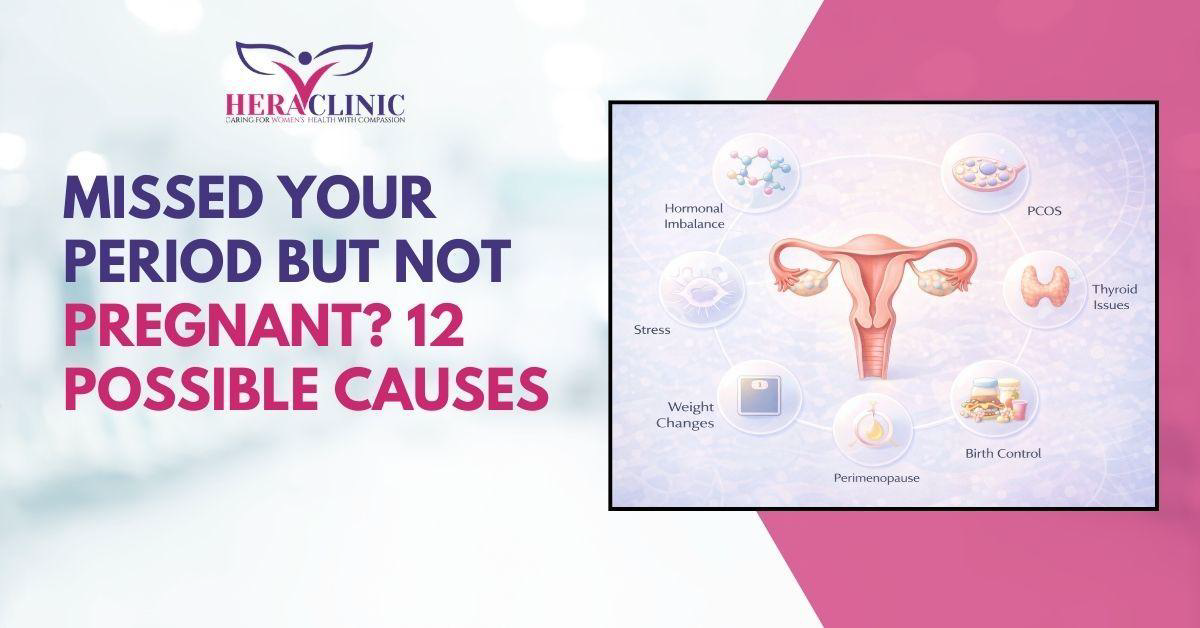
Missed Your Period But Not Pregnant? 12 Possible Causes
Missing your period can instantly trigger anxiety. For many women, a delayed cycle feels alarming, especially if pregnancy is not planned or not expected. You may find yourself replaying the last few weeks in your head, calculating dates repeatedly, checking symptoms, and taking more than one pregnancy test just to be sure. When the test comes back negative, relief may mix with confusion. If you’re not pregnant, then why is your period late? Is something wrong? Should you be worried?
The truth is, while pregnancy is the most commonly assumed reason for a missed period, it is far from the only cause. The menstrual cycle is influenced by a delicate balance of hormones, metabolism, stress levels, body weight, thyroid function, lifestyle habits, medications, and overall health. Even small changes in these areas can temporarily delay ovulation and, in turn, delay your period. In many cases, a missed period without pregnancy is not a medical emergency but rather a signal that your body is responding to internal or external changes. Understanding what those changes might be is the first step toward reducing worry and taking appropriate action.
Before exploring the possible causes, it helps to understand how your menstrual cycle works and why it can shift.
How the Menstrual Cycle Works — And Why It Can Change
A typical menstrual cycle lasts between 21 and 35 days, though this can vary from woman to woman. Some women have predictable cycles, while others naturally experience slight fluctuations.
Your cycle depends on coordination between the brain, ovaries, and uterus. The hypothalamus and pituitary gland in the brain send hormonal signals to the ovaries. The ovaries respond by producing estrogen and progesterone, which regulate ovulation and prepare the uterine lining for pregnancy.
Ovulation is the key event. If ovulation happens later than usual, your period will also arrive later. If ovulation does not happen at all during a cycle, you may skip your period entirely.
That’s why most missed periods are actually related to delayed or absent ovulation, not necessarily pregnancy.
Now let’s explore the 12 most common non-pregnancy causes in more detail.
1. Stress (Emotional or Physical)
Stress is one of the most common and underestimated reasons for a late period. When you experience stress, your body produces cortisol. Elevated cortisol levels can interfere with the hypothalamus, which controls the hormones responsible for ovulation. If this communication is disrupted, ovulation may be delayed or suppressed entirely for that cycle.
Stress doesn’t have to be dramatic to affect your period. Chronic low-grade stress, work pressure, family responsibilities, financial strain, or lack of sleep can all impact hormonal rhythm. Physical stress, such as illness, surgery, injury, or even jet lag, can also delay cycles.
According to Dr. Sairandhri Kate-Shinde, many women are surprised to learn that emotional stress alone can delay ovulation by weeks. Once stress levels normalize, cycles often return to their usual pattern.
2. Hormonal Imbalance
Your menstrual cycle depends on precise hormonal coordination. Even subtle disruptions in estrogen, progesterone, LH, or FSH can delay ovulation.
Temporary hormonal imbalance may result from:
- Poor sleep
- Night shifts
- Nutritional deficiencies
- Acute infections
- Rapid lifestyle changes
Symptoms may include breast tenderness, mild cramping without bleeding, acne flare-ups, or mood swings.
Occasionally, the body goes through an anovulatory cycle, meaning ovulation doesn’t occur that month. This can happen once in a while and may not indicate a serious issue. However, frequent anovulatory cycles require evaluation.
3. Polycystic Ovary Syndrome (PCOS)
PCOS is one of the leading causes of irregular or missed periods. It is associated with insulin resistance and elevated androgen levels, which interfere with normal ovulation. Instead of releasing a mature egg, the ovaries may develop multiple small follicles that do not ovulate properly.
Common symptoms include:
- Long cycle gaps (40+ days)
- Weight gain
- Acne
- Excess facial hair
- Hair thinning
At Hera Clinic, PCOS is one of the most commonly diagnosed causes of missed periods, particularly in women with recurrent irregular cycles. Early diagnosis allows for timely management and prevention of long-term complications.
4. Thyroid Disorders
The thyroid gland regulates metabolism and significantly influences reproductive hormones. Hypothyroidism can slow ovulation and lead to delayed or heavy periods. Hyperthyroidism can cause lighter or missed periods.
Other thyroid symptoms may include fatigue, hair thinning, sudden weight changes, mood fluctuations, and sensitivity to cold or heat. A simple blood test can identify thyroid dysfunction, and proper treatment usually restores menstrual regularity.
5. Sudden Weight Loss
Significant or rapid weight loss can suppress ovulation. When body fat percentage drops too low, estrogen production decreases. Without sufficient estrogen, periods may stop. This is common in crash dieting, eating disorders, or severe calorie restriction. Restoring balanced nutrition often restores cycles.
6. Rapid Weight Gain
Rapid weight gain can increase insulin resistance and disrupt ovulation. Fat tissue also produces estrogen, and excess estrogen can interfere with hormonal timing. Moderate, consistent weight management improves cycle stability.
7. Excessive Exercise
Intense physical training combined with inadequate nutrition may lead to exercise-induced amenorrhea. When the body senses low energy availability, it conserves energy by pausing reproductive function. Reducing exercise intensity and improving nutrition usually restores menstrual cycles.
8. Birth Control Changes
Stopping hormonal birth control can temporarily delay your period while your body re-establishes natural hormone patterns. Cycles typically return within a few months.
9. Perimenopause
Women over 40 may experience irregular cycles due to fluctuating estrogen levels during perimenopause. Hot flashes, sleep disturbances, and mood changes may accompany cycle irregularity.
10. Chronic Medical Conditions
Chronic illnesses such as diabetes, celiac disease, or pituitary disorders can disrupt menstrual regulation by affecting hormone signaling pathways.
11. Medications
Certain medications can interfere with ovulation and menstrual timing. At Hera Clinic, medication history is always reviewed carefully when evaluating menstrual irregularities.
12. Early Pregnancy (Testing Too Soon)
Late ovulation can delay detectable hCG levels, causing a false negative test. If your period remains absent, repeat testing after a few days. As explained by Dr. Sairandhri Kate-Shinde, irregular ovulation patterns often explain delayed positive pregnancy tests.
When Should You See a Doctor?
Seek medical evaluation if:
- You miss 2–3 consecutive periods
- You experience severe pelvic pain
- Bleeding is unusually heavy
- You notice breast discharge
- You have symptoms of thyroid issues or PCOS
Early diagnosis allows effective management and reassurance.
Final Thoughts
Missing a period when you’re not pregnant can feel unsettling, but it is often a temporary response to stress, metabolic changes, or hormonal fluctuations. Your menstrual cycle reflects your overall health and responds quickly to internal shifts.
If irregularities persist, professional guidance can help identify the cause and restore balance. Listening to your body calmly and seeking help when needed is the healthiest approach.